
Hercules: Myth or reality?
All commentators and historians agree that Seville was founded by Hercules. But can we believe this claim? Isn't Hercules a god of the classical mythologyHow can we believe in a mythological god who came to Seville to found it as a city?

The Phoenicians in Spain
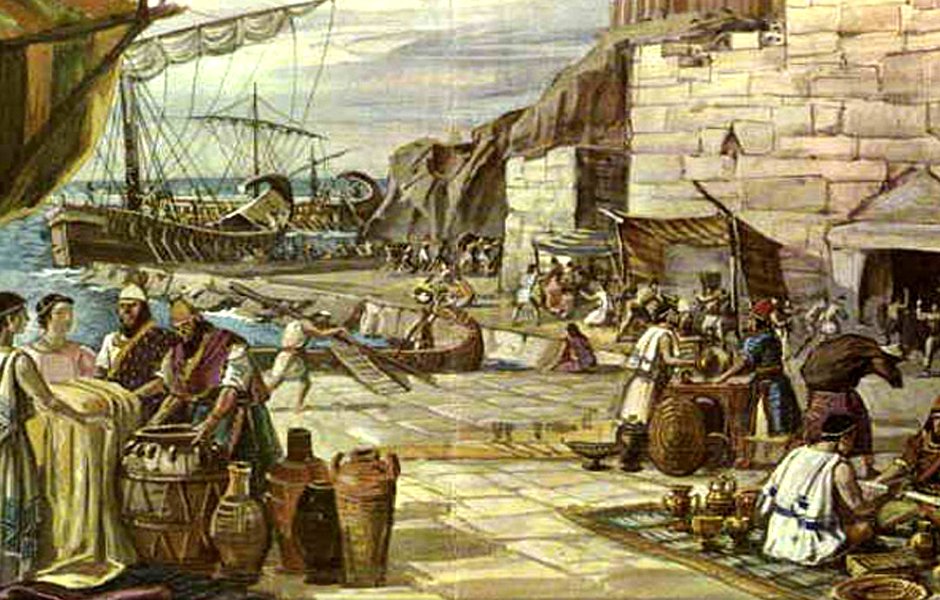
Around the year 1000 BC, That is, about three thousand years ago, the first navigators arrived Phoenicians to Spain. They were sailing through the Mediterranean Sea, Having sailed along the coast of North Africa, where they learned the Egyptian religion (that of the god Osiris and the goddess Isis); and where they founded a colony, near present-day Tunisia, which they named Kar-tago, what does it mean new city.
From there they continued to progress in their journeys or voyages, getting closer and closer to Strait of Gibraltar. They did not dare to cross this zone because of the fear that all the ancients felt of the unknown ocean., the Atlantic.
Between two seas
Only one navigator, more daring than the others, called Melkart, He decided to sail his ship, braving the currents, between the two promontories that form the Rock of Gibraltar and the Rock of Calpe.
After finding the Atlantic Ocean, he continued sailing north along the coast until he found the mouth of the Guadalquivir River, which at that time was located near Coria del Río. He traveled up this river and reached the place that Seville occupies today. Here, on an islet formed between two branches of the river, he found his place.
This is the space where we see today Plaza del Salvador, Cuesta del Rosario and Plaza de la Pescadería. In this triangle, nowadays, when trenches are dug to open foundations each time a building is constructed, or when sewer repairs are carried out, fragments of ceramics and other vestiges of the first Phoenician foundation.
The first Phoenician factory
Legend says, however, that those lands were already inhabited by...the Turdetani, who was in command of King Geryon, They lived off the trade of hides and skins from the numerous wild bulls that occupied the hills and plains of the region.
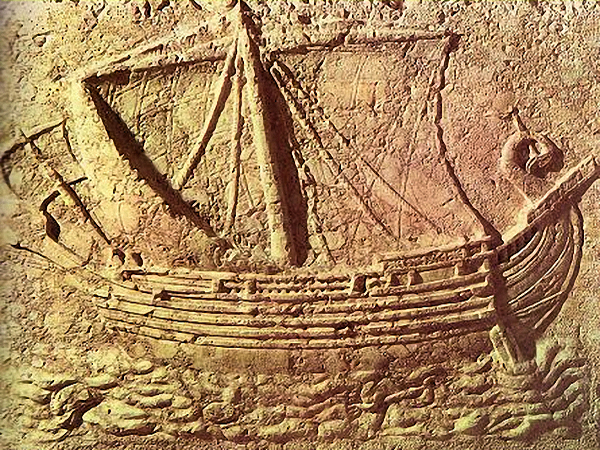
However, Melkart, the navigator, established here the first Phoenician trading post which he named “Spal”, which in the Phoenician language seems to mean "plain next to a river", that is, "marsh".
Furthermore, he achieved, through treaties and armed incursions, seize the monopoly on furs and hides from Andalusia, probably teaching the indigenous Turdetani to capture and kill the countless wild bulls that inhabited the mountains and plains of the region.
He was able to do this after subduing the king of the Turdetani, Geryon, whom he imposed not only commercial servitude, but also the change from the primitive religion professed by the Turdetani to a new Egyptian religion.
The origins of the legend
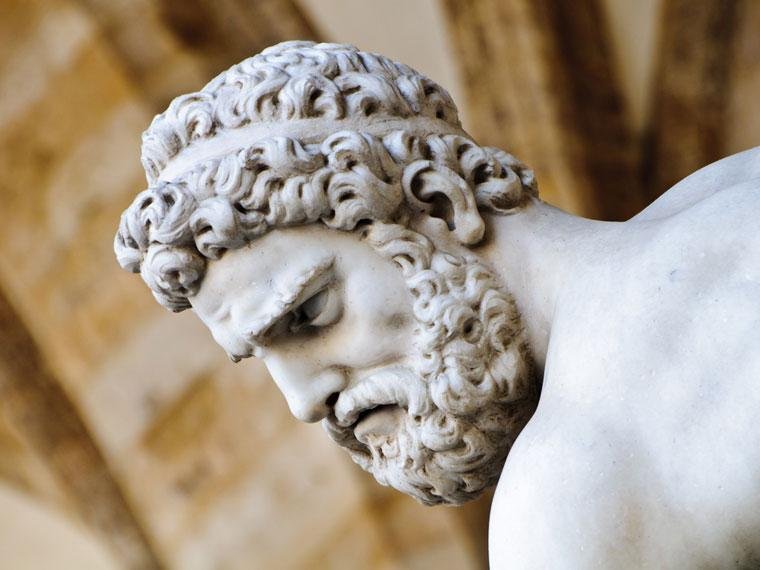
These are the facts as they occurred. Later, based on this real foundation, a new narrative was formed. the legend. Melqart, when he died, was declared by the Egyptians and Phoenicians to be a hero, saint, and god, later changing his name from Melqart to that of Heracles, and among Latinos because Hercules.
It is natural that he is considered hero, Since he had been the first to dare to navigate an unknown ocean, supposedly full of evils and dangers, it was natural that he was considered saint and god, for having brought a religion to savage peoples.

The people make the hero and the saint
In reality, the Phoenicians behaved exactly the same way as later peoples have behaved, and so we Spaniards, we have considered heroes to the bold discoverers of America, who founded cities in Mexico or Peru, and we have recognized their pious virtues for having brought our Christian religion to the wild Indians of the New World.
There has been no shortage of repeated proposals and attempts to canonize Christopher Columbus as a saint, for having been the initiator of the Christianization of America. Even today, his cause for sainthood is being promoted for that reason. Queen Isabella the Catholic, for having sponsored the discovery of America, which doubled the scope of Christendom.
In the same way, Melkart, called Herakles and Hercules, ascended to the altars of classical mythology.

The passage to posterity
After, the poets and the authors of tragedies, In Greece and Rome, they invented, using authentic events from their lives, the legends of “The Twelve Labors of Hercules” Among these achievements, some more embellished than others, was the breaking of the mountains that joined Africa and Spain, which symbolically meant forcing passage through the Strait of Gibraltar. In this way, myths and fears were dispelled, and it became “Plus ultra” what until then had been “Non plus ultra”.
And another event, that of having taken over the market for bull hides and skins, which enriched Phoenician trade, becomes the legend that “He cleaned the stables of King Geryon and tamed the ferocious bulls.”.
The myth of Hercules
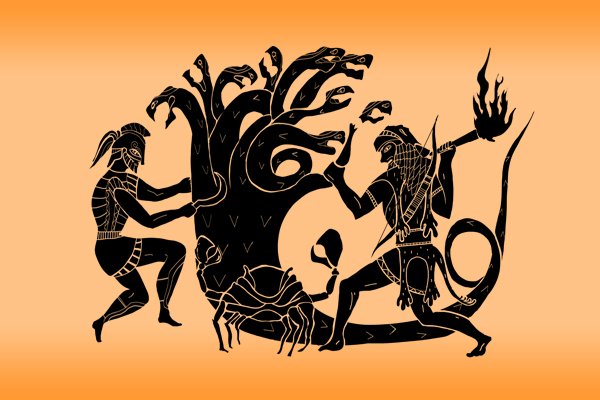
The myth tells that Hercules was the son of Zeus and Alcmena. But his birth was not the result of a love affair, for Zeus disguised himself as Alcmena's husband, Amphitryon, and assumed his form while he was away at war. In this way, he fathered a son with her, Hercules. This had dire consequences for young Hercules, for Zeus's wife, Hera, Upon learning of this and enraged by the event, she set about tormenting Heracles' life from childhood.
Heracles was not known for great intelligence or wisdom; the things he enjoyed most were wine, food, and women. Furthermore,she was very temperamental, This caused him to lose control of his immeasurable strength whenever he gave in to anger. However, this didn't mean everything was bad. Once he calmed down, he came to understand the weight of his actions and accepted the punishment he deserved, even vowing not to use his strength for the duration of that punishment.
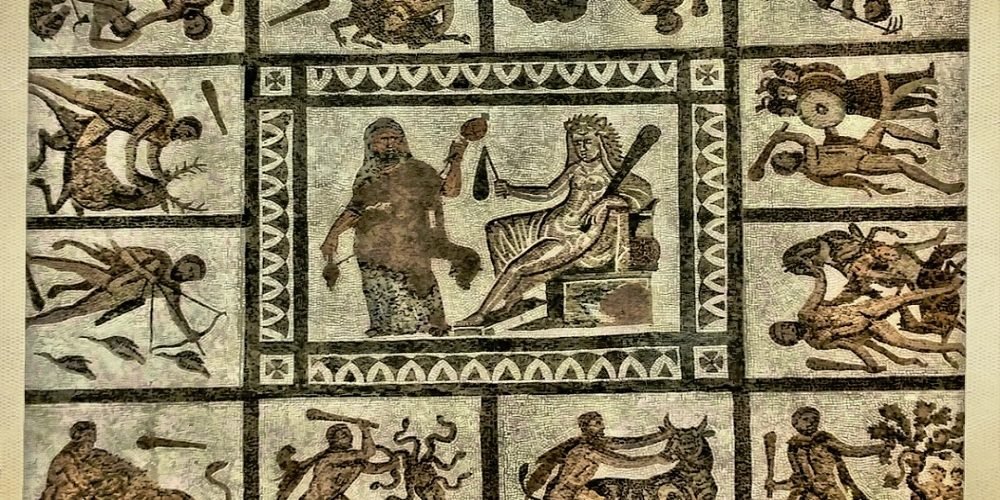
Our Greek hero also He had children with Megara, Upon them, a terrible event befell them. Hera, Zeus's wife, as we have already mentioned, unable to defeat Hercules because he was stronger than her, caused him to lose his memory for a time. In his confusion, Hercules murdered his wife and three children in cold blood, and when he regained his memory, he was filled with sorrow and agony. To make amends for his actions, he agreed to perform 12 jobs, entrusted after visiting the Oracle of Delphi as penance.
The Twelve Labors of Hercules
The list of tasks, jobs that were entrusted to Hercules, The following were performed in order to purify his sins and grant him eternal life:
- Kill the Nemean Lion
- Kill the Hydra of Lerna
- Capture the Ceryneian Hind
- Capture the Erymanthian Boar
- Clean the Augean stables in a single day
- Kill the Stymphalian birds
- Capture the Cretan Bull
- Steal the mares of King Diomedes
- Recover the girdle Hippolyta, Queen of the Amazons
- Steal the monster's cattle Geryon
- Stealing the apples from Garden of the Hesperides
- Capture and bring back Cerberus, the Guardian of the Underworld
Finally, Hercules IHe managed to overcome these 12 difficult tasks and earned his place as the greatest hero in Greek history, alongside Achilles.
The founder and his remains
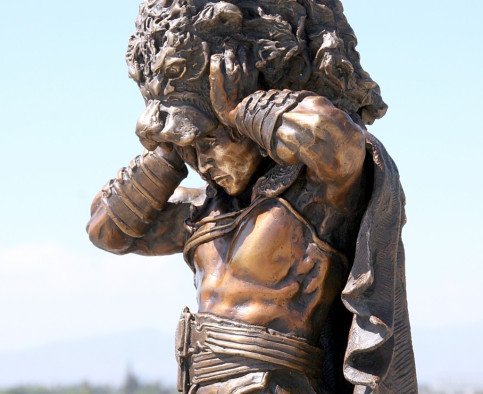
Seville, through all its historians and chroniclers, has always recognized, and continues to recognize, Hercules as the founder of the city. For this reason, we find his statue placed in public places, and in the place of honor reserved for the founding fathers. Thus, in the Town Hall archway, The statue of Hercules is the first.

And when the illustrious assistant of the city, Don Francisco de Zapata y Cisneros, Count of Barajas, He built the Alameda promenade, and placed on it, topping it off, one of the columns brought from Temple on Marble Street The new promenade featured a statue of Hercules, the founder of Seville, and gave his name to the place, which has been called Seville ever since. Alameda de Hércules.

Finally, we will say that in the Jerez Gate (gate in the wall, demolished in the 19th century) there were some above the entrance arch Latin verses, which translated into Spanish said:
“Hercules built me up,
Julius Caesar surrounded me
of walls and high towers,
and the holy king won me over
with Garci Pérez de Vargas*.”
*(Garci Pérez de Vargas was a Castilian knight of the 13th century, a hero of the Spanish Reconquista.)